


Your Meditation practice isn't failing you. You're simply practicing the wrong technique.
It's not a lack of devotion.
It's not a lack of discipline.
It's not a lack of knowledge.
No one helped you find the right entry point.
The 112 Doorways Institute offers a personally assessed framework for identifying the contemplative practices that are right for you, your nervous system, your history, and your way of engaging with the world around you. This isn't a one-size-fits-all approach. There are literally hundreds of possibilities. We will help you open the correct doorway into your awareness.
The problem isn't effort. It's fit.
There are hundreds of meditation and contemplative practice available.
Most instruction offers the same approach to everyone.
The result is that sincere, committed practitioners spend years with techniques that
weren't designed for how they're built and wonder why the results are inconsistent, or
why they feel stuck at a particular threshold.
We built a different kind of approach.
Over 1,500 years ago, the Vigyan Bhairava Tantra, one of the most precise contemplative maps ever written, has described 112 distinct doorways into expanded awareness. Each technique is a different entry point. Each works for a different kind of person.
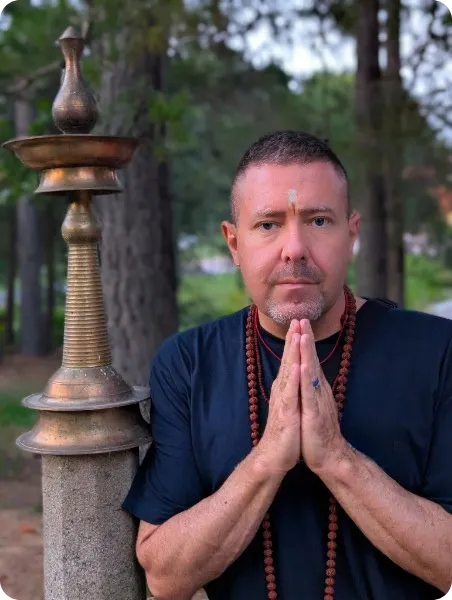
The 112 Doorways Institute was founded by Gregory Scott to make contemplative awareness accessible: through a rigorous self-assessment, a complete practice guide, and a certification program for practitioners who want to bring this methodology to the people they work with.
How it works
A framework that supports your complete development arc.
Find your doorways
Practice with precision
Develop across a full arc of your practice map
The 112 Doorways Assessment maps your contemplative access across six dimensions and three clinical modifier patterns producing a personalized picture of which practices are most likely to open the door to awareness for you, and why.
Whether through the book, a self-guided program, or work with a certified practitioner, you build a practice that's grounded in your actual architecture. Not a generic curriculum.
The Institute's framework supports development over time, not just a starting point, but a map of the thresholds that lie ahead. With advanced programs including practitioner certification programs, the Threshold Dehe Sadhana program and instructor certifications, we are here with you through your journey.
One methodology. Three entry points.
For Everyone
The 112 Doorways Book & Assessment
A complete guide to all 112 techniques plus the formal assessment that identifies your primary contemplative doorways.
For Practitioners
Threshold Deha Sadhana
A structured immersive and somatic practice for individuals who want to move through their development with guidance, accountability, and precision.
For Professionals
Practitioner Certification
Eight-module professional training for coaches, therapists, yoga teachers, and somatic practitioners who want to bring this methodology into their work.
FAQS
Doesn't "Tantra" mean something... else?
In Western popular culture, yes.
Tantra has become almost synonymous with sexual practice. This is a modern conflation that has very little to do with the actual tradition.
Historically, Tantra is a major stream of Indian [Hindu] philosophy concerned with consciousness, the body as a site of direct experience, and the use of practice rather than belief as the primary means of inquiry.
Some Tantric traditions include teachings on sexuality. However, they represent a small fraction of a vast body of work.
The source text for this work, the Vigyan Bhairava Tantra, contains 112 contemplative techniques. None of them are sexual. All of them are concerned with one thing: how to make direct contact with the awareness that underlies all experience.
If you arrived here curious about meditation, presence, or contemplative practice, you're in exactly the right place.
Do I need to be spiritual or religious to use this?
No. The 112 Doorways methodology is drawn from an ancient Hindu Tantric text, but the practices themselves don't require any belief, religious, spiritual, or otherwise. You don't need to believe in Shiva, accept any metaphysical claims about consciousness, or identify with any tradition.
The techniques work through direct experience, not through faith. What matters is whether they produce genuine development for you and that's something you can verify for yourself.
What exactly is the Vigyan Bhairava Tantra?
It's a Kashmiri [from the Kashmir region of India] text composed roughly 1,500 years ago that contains 112 distinct techniques for accessing the present moment directly through the breath, the body, the emotions, the senses, intensity, and awareness itself.
It's presented as a dialogue between two figures from Hindu mythology, but its content is practical rather than theological: a detailed map of different ways human beings can make direct contact with their own experience.
The 112 Doorways treats it as a clinical resource the mythology stays in the background, the practices come to the foreground.
If you read: Tantra, and thought Sex. You're in the wrong place for that.
How is this different from regular meditation?
Most meditation instruction gives everyone the same practice. Typically some form of breath awareness or mindfulness and trusts that consistency will eventually produce results.
The 112 Doorways starts from a different premise: that the right practice is different for each person, and that a generic approach will produce generic results at best and active frustration at worst.
This methodology begins with a formal assessment that identifies which of six contemplative doorways are most accessible for your specific nervous system, and builds a personalised practice plan from that. It's the difference between a general fitness class and a training programme designed for your body.
What is the assessment, and how does it work?
The 112 Doorways Assessment is a self-report questionnaire that measures your current access across six dimensions of experience. Specifically: breath, body, emotion, sensory awareness, intensity, and awareness itself.
As well as three clinical patterns (anxiety, emotional numbness, and dissociation) that significantly affect which practices are appropriate.
The results identify your primary contemplative doorways, your profile type, and any specific considerations that shape the practice mapping.
It typically takes 20–30 minutes to complete, and the output is a specific, evidence-based starting point rather than a generic recommendation.
NOTE: In the interest of privacy, the Online Assessment Tool DOES NOT SAVE your results. Please be sure to download and save your PDF'd results. Once you close the assessment, your results will not be recoverable.
I've tried meditation before and it didn't work. Is this different?
Probably yes. And the reason it didn't work is likely what this methodology was designed to address.
Most people who "can't meditate" have simply been given the wrong practice for their particular system.
Someone with chronic anxiety often finds that inward breath-focused attention makes the anxiety worse, not better.
Someone with a highly analytical mind often finds that sitting quietly produces more thinking, not less.
These aren't personal failures they're mismatches between the practice and the person. The assessment identifies exactly which doorways are accessible for you, and which aren't, so you're not starting from the wrong place.
Is this therapy? Can it help with anxiety or depression?
The 112 Doorways is not therapy and is not a clinical treatment for any psychological condition.
It won't diagnose anything and doesn't replace mental health care.
That said, many people find that a well designed contemplative practice produces meaningful changes in their relationship to anxiety, emotional difficulty, and mental patterns.
Not because the practice treats those conditions, but because it develops a different quality of relationship with their own experience.
If you are managing a significant mental health condition, this work is most effective as a complement to clinical support, not a substitute for it.
Who is the Certified Practitioner Program for?
It's designed primarily for people who already work with others in some professional capacity; coaches, therapists, counselors, yoga teachers, somatic practitioners, wellness professionals, and those who want to add a rigorous, assessment-based contemplative practice layer to what they offer.
It's also appropriate for someone who wants to build a practice centred specifically on this methodology.
You don't need a clinical background, but you do need to be genuinely committed to your own practice. The program requires a personal practice log alongside the coursework.
How long does the Certified Practitioner Program take?
The program is designed to be completed in 10–12 weeks, with approximately 8–12 hours of engagement per module.
It includes eight modules of video instruction, practicum exercises with real subjects, a simulated client engagement, and a final examination.
Certification is issued upon completing all requirements. Typically within two weeks of the final submission.
What can I do with the certification?
Graduates are licensed to use the 112 Doorways Assessment and methodology with individual clients, offer assessment-based contemplative practice mapping as a named professional service, and use the 112 Doorways Certified Practitioner credential in their marketing and biography.
You'll be listed in the practitioner directory and have access to the digital assessment tool as well as various other tools and resources available only to those who are 112 Doorways Certified Practitioners.
The certification does not confer a mental health qualification — it is a professional credential in contemplative practice mapping specifically.
Where do I start?
If you're a practitioner looking to offer this work to clients, the Certified Practitioner Program is the right place.
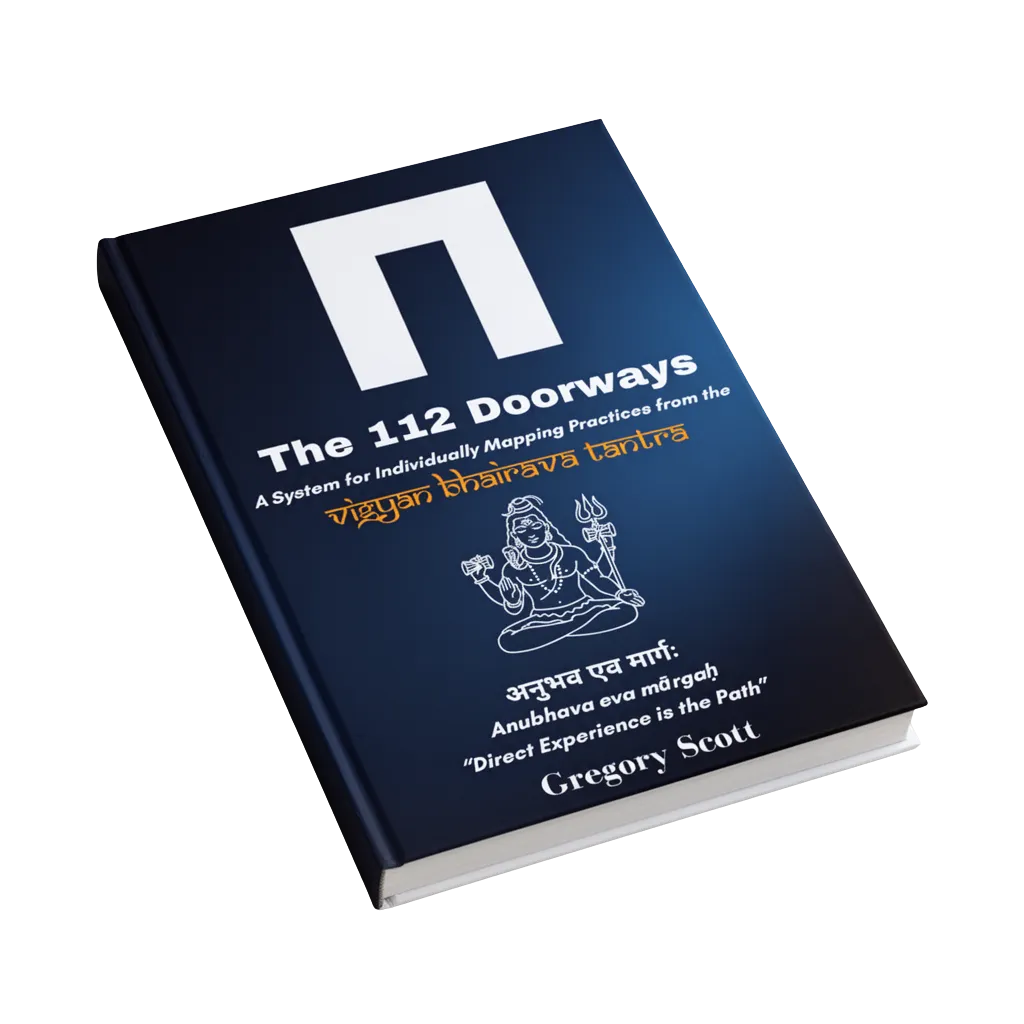
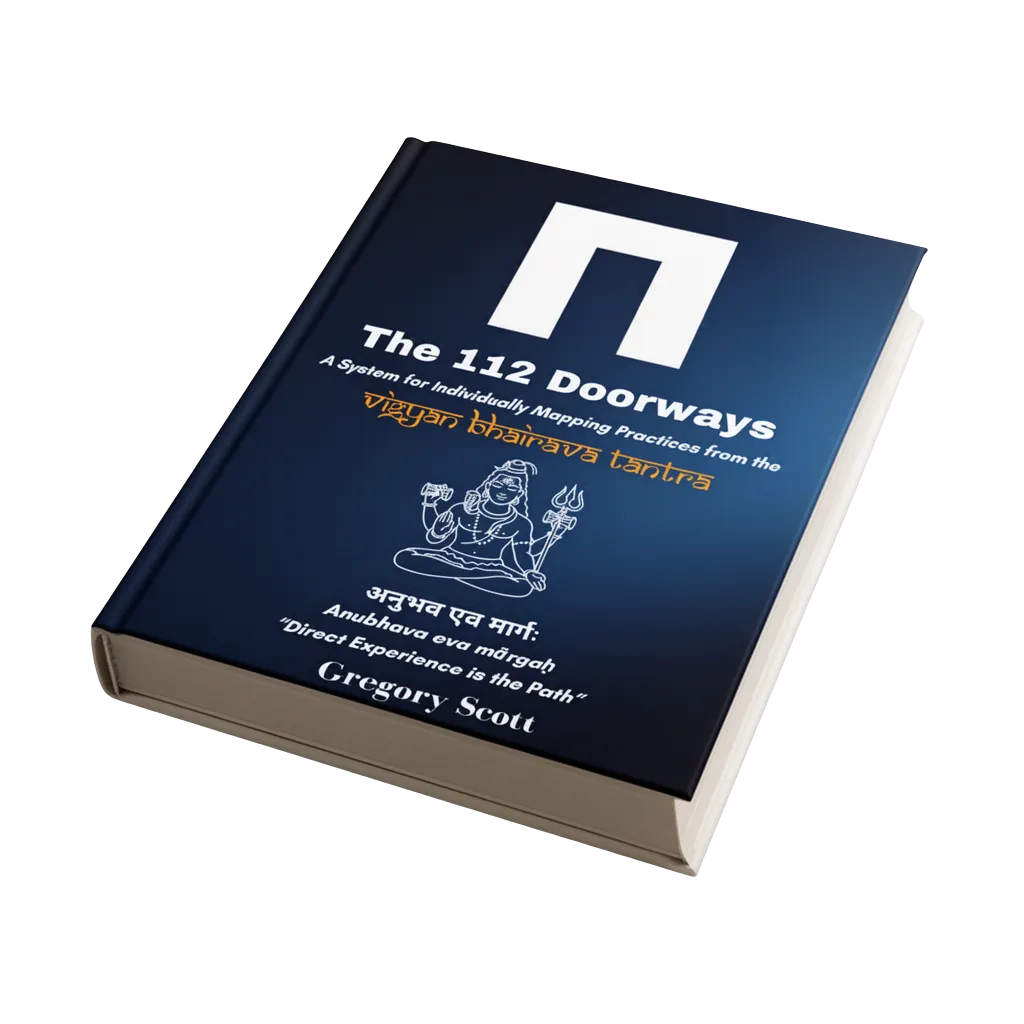
If you're an individual who wants to develop your own practice, start with the book: The 112 Doorways: A Practical Guide to the Vigyan Bhairava Tantra, which includes the full self-assessment and all 112 techniques.
If you're not sure which applies to you, the online assessment is available above and may be used as a standalone starting point.
Do I need prior yoga or movement experience to take the 112 Doorways: Threshold Deha Sadhana course?
No. The only prerequisite for the Threshold Deha Sadhana is completion of the 112 Doorways Assessment and an established practice with the contemplative techniques.
The physical practices in this course are accessible to anyone regardless of fitness level, flexibility, or movement background. What matters is not what your body can do, it is the quality of attention you bring to what your body is already doing.
Practitioners who have never set foot on a yoga mat and practitioners with years of movement experience will find themselves working at the same depth, because the depth here is contemplative, not physical.
How does this course relate to the 112 Doorways contemplative practice I have already been doing?
Nothing in your existing practice is replaced or set aside. The Threshold Deha Sadhana opens a new dimension of the same work.
The 112 Doorways techniques you have been practicing operate primarily through awareness and inquiry. They are interior, still, and largely non-physical. This course gives that same practice a body.
The six Doorways you have been working with contemplatively are now met through breath, movement, and somatic attention.
What most practitioners find is that the two practices deepen each other. What is recognized in stillness becomes more available in movement, and what is discovered in the body clarifies what was previously understood only as concept.
What does a typical course day look like? Is it physically demanding?
Each day runs approximately seven hours, including breaks.
The structure moves between short philosophy sessions, experiential deep dives into each of the six Doorways, facilitated group dialogue, and two complete runs of the full Threshold Practice. One on each day.
The physical practices are genuinely accessible: they include seated breathwork, simple standing poses, slow walking, and the Surya Namaskar sequence taught in its most foundational form.
The course is not physically demanding in the way that an athletic training or advanced yoga program would be. It is, however, experientially demanding.
You will be asked to be present with what arises in the body, including emotional material, with sustained and honest attention. That is where the real work lives.
Will I be able to practice the Threshold Deha Sadhana on my own after this course?
Yes. That is the explicit purpose of the course.
By the end of Day 2, you will have practiced the complete 90-minute Threshold Deha Sadhana twice in full, worked through each of the six Doorways in depth, and received the philosophical understanding necessary to practice it intelligently and independently.
The course closes with a formal sadhana commitment. a specific, personal plan for integrating the Threshold Practice into daily life.
The practice is designed to be practiced daily, and everything in the two days is oriented toward giving you what you need to do exactly that.
Why is the sequence of the six Doorways fixed? Can I practice individual Doorways on their own?
The sequence is fixed because it is not arbitrary. It is the practice.
Breath settles the nervous system and establishes interior attention.
Body grounds that attention in physical reality.
Emotion opens the interior landscape.
Sensory expands awareness outward into the world.
Intensity peaks and clears the last layer of managed experience.
Awareness receives everything that has been opened. Each Doorway prepares the one that follows, and the full arc, from breath to awareness, is what makes the practice complete.
Practicing individual Doorways in isolation is something the advanced courses address, once the full practice is genuinely established.
At this stage, the integrity of the sequence is the practice. Walking it daily, in order, is how the body learns what the practice is pointing toward.
© Copyright 2026. | 112 Doorways Institute™ | All Rights Reserved.